
News / A Specialty Issue of Clinical Therapeutics Edited by Massachusetts Cannabis Control Commission Research Department is Now Available
For Immediate Release
January 21, 2026
Contact
Maryalice Curley
Director of Communications
857-292-4891
Neal McNamara
Press Secretary
857-507-0885
A Specialty Issue of Clinical Therapeutics Edited by Massachusetts Cannabis Control Commission Research Department is Now Available
Part Two Coming this Summer
WORCESTER—This month, Elsevier published the first of a two-part 2026 specialty issue of Clinical Therapeutics, a peer-reviewed medical journal guest edited by the Massachusetts Cannabis Control Commission (Commission) Research Department, focused on the intersection of cannabis research and regulation.
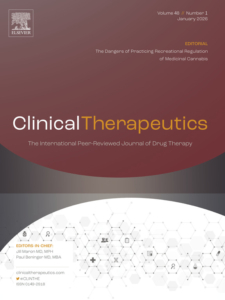
In addition to co-editing this edition, the Commission’s Chief of Research, Dr. Julie Johnson, and Research Analysts Alex Colby and Graelyn Humiston, co-authored the editorial introduction titled, “Cannabis Research, Policy, and Therapeutics—An International Quasi-Experiment in Cannabis Policy— Part 1 (2026).”
The specialty Clinical Therapeutics issue, which follows the first-ever cannabis issue published in 2023, aims to highlight recent policy changes and research gaps needed to facilitate evidence-based policy in legalized jurisdictions across the globe. The Commission, in collaboration with Elsevier, the publisher of the journal, first issued a call for papers in January 2025, and accepted submissions until September 2025. Clinical Therapeutics provides peer-reviewed, rapid publication of recent developments in drug and other therapies as well as in pharmacoeconomics, health policy, treatment outcomes, and innovations in drug and biologics research.
“This issue of Clinical Therapeutics comes at a critical time as historic efforts regarding cannabis are being made at the federal level, including a full review and recommended reschedule of cannabis under the Controlled Substances Act in 2023, and the recent 2025 Executive Order initiating a potential rescheduling of cannabis from Schedule I to III,” said Johnson. “The published articles showcase a wide range of research on the intersection of cannabis policy, regulation and science, and highlight gaps for future research.”
“The Commission is excited for the opportunity to guest edit another issue of Clinical Therapeutics and to continue our partnership with Elsevier,” said Executive Director Travis Ahern. “Massachusetts is already considered a research leader nationwide; our ability to inform policymaking with cutting-edge cannabis research will ensure our agency maintains our position as a regulatory leader as well.”
“I want to congratulate our Research team on all their work to bring another Clinical Therapeutics publication to fruition,” said Commission Chair Shannon O’Brien. “With topics ranging from the use of medical cannabis to treat physical and mental illnesses to policy design for cannabis research to challenges and opportunities with the development of botanical drugs, this issue will add to a much-needed pool of scientific research on cannabis.”
Several key issues for researchers and regulators are discussed throughout the issue, including medical efficacy, standardizing metrics for research and policy, developing cannabis botanical drugs under federal law, mental health effects, leveraging technology to enhance clinical care, and the latest in cannabis testing science.
The first part of the specialty issue will be widely disseminated by Elsevier to its international audience of scientists and clinicians in a variety of research, academic, and clinical practice settings. The second part is expected to be published this summer.
All findings represent the independent work of individual authors and do not represent policy endorsements from the Commission.
The Commission’s Center for Cannabis Research and Policy (CCRP) serves as an applied cannabis policy research center of excellence and is among the first of its kind to both inform evidence-based policy decisions and add to the applied scientific literature. Bringing together legislators, regulators, researchers, and other government agencies to study the implementation and effects of cannabis policies, the CCRP follows an annual research agenda outlined in G. L. c. 94G, § 17(a) and G. L. c. 94G, § 17 (b). It also assesses other topics of interest, such as states’ effectiveness at creating a diverse new industry and rectifying harms from marijuana prohibition and enforcement. The CCRP has focused on merging academia and policy by bringing diverse stakeholders together and publishing for a variety of audiences to advance cannabis policy research. To learn more about how the Commission has executed its legislative research mandate, visit MassCannabisControl.com/Research.
###
Get Notified
Subscribe for updates from the Cannabis Control Commission.